SAMPLE RATE
60s
continuous
ALERT LATENCY
< 30s
excursion to phone
BATTERY LIFE
5 yrs
no maintenance
The problem
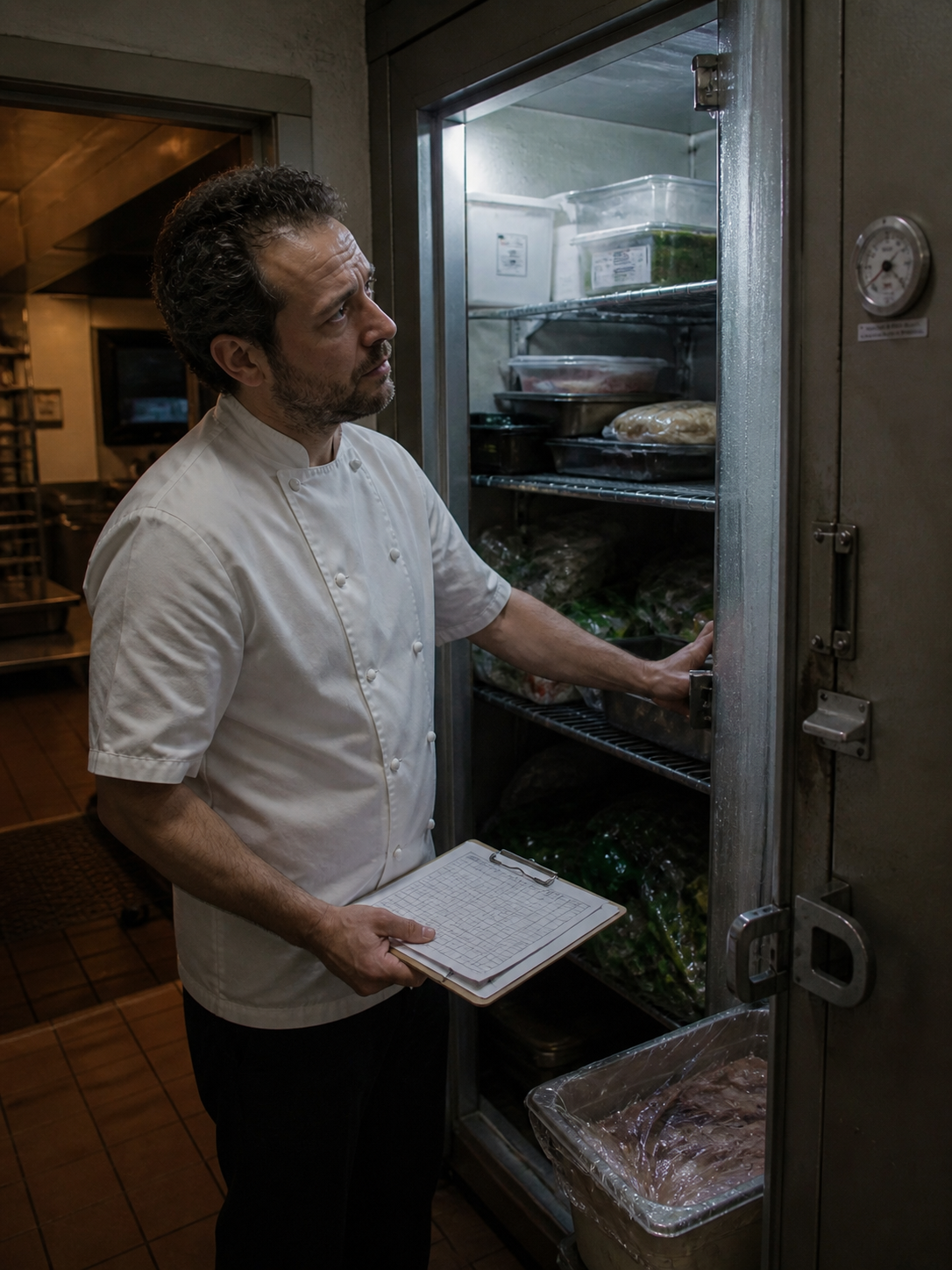
A walk-in compressor fails on Saturday at 2am. You find out Monday morning.
Manual temp logs are checked twice a day and forged the rest of the time. Excursions go unnoticed. Inventory walks out the door. Inspectors notice the gaps.
How Mise solves it
Every cold unit, monitored every minute, alerting the manager on call.
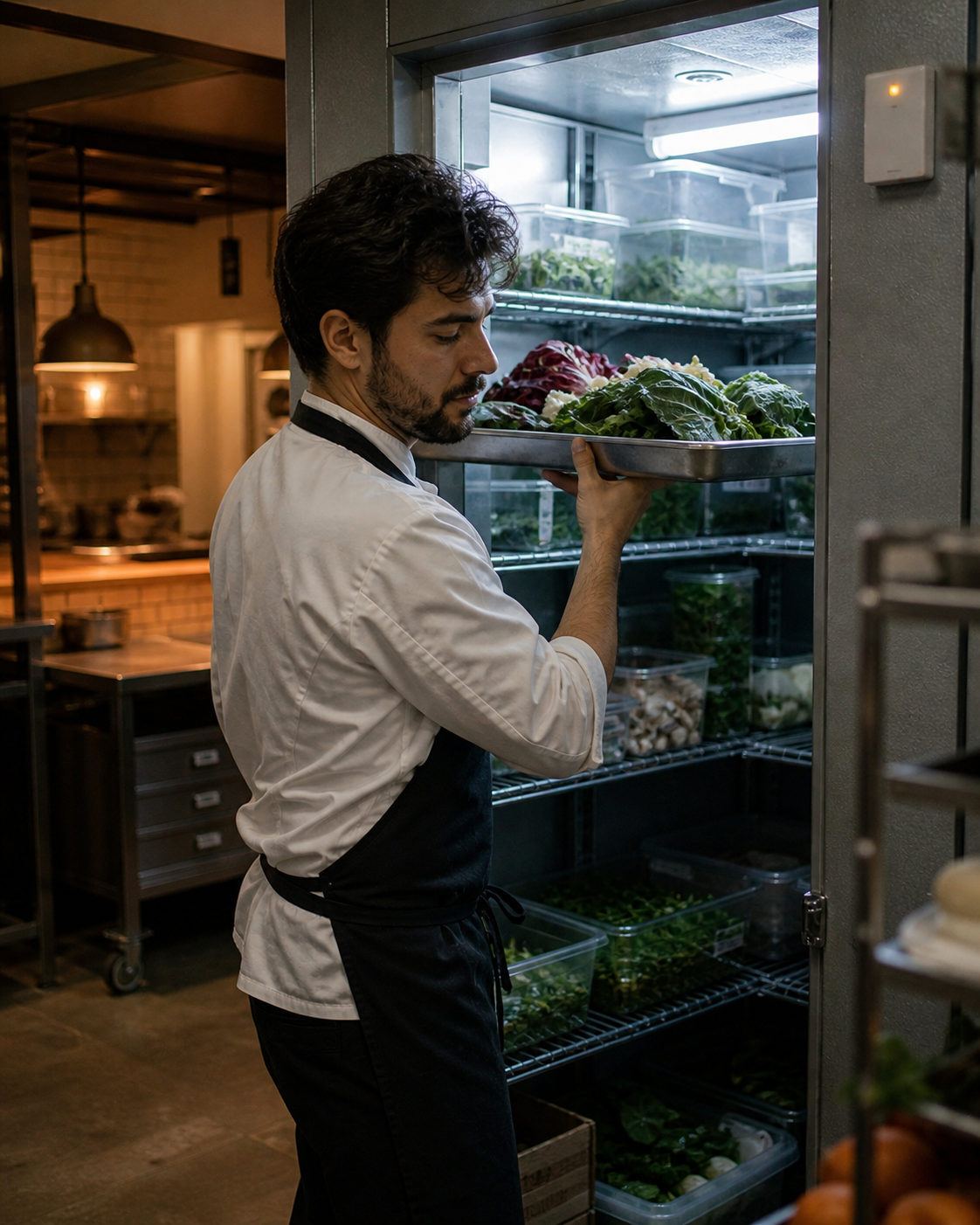
Wireless sensors stick to any unit. They sample every minute, report to the cloud, and text the manager the moment something drifts. HACCP logs generate themselves.
capabilities
Every feature, in plain language.
connected to the rest of mise
Food Safety talks to the platform.
In active development
Food Safety is coming soon.
We're building this one in close partnership with real operators. Pricing will be published when we open it up. In the meantime, if you want early access or want to help shape how it works, write to us.
Get early access →questions, answered
The things operators ask first.
What can you actually monitor? +
Anything with a temperature spec: walk-ins, reach-ins, freezers, prep tables, hot-holding wells, even dishwasher final-rinse temps. Sensors are unit-agnostic and most kitchens have one on every cold unit and the line.
How does installation work? +
Sensors mount inside the unit with a magnetic plate or industrial adhesive. No drilling, no wiring, no downtime. Fifteen minutes per unit during a quiet shift, and you're live.
What happens during a WiFi or power outage? +
Sensors store readings locally for up to 14 days and back-fill the cloud the moment connection returns. You don't lose history, and inspectors won't see a gap. The sensors run on internal batteries; a building outage doesn't stop them.
Who actually gets the alert? +
Configurable per unit. By default, the manager on duty is paged within 30 seconds; if it's not acknowledged within a window you set, it escalates to the GM and chef. Quiet hours are respected for non-excursion notices, but a real excursion always cuts through.
Multi-location? +
One dashboard across every unit at every site. Alerts route to the manager on duty at the affected location, not to a corporate ops desk that can't do anything about it.
Inspector reports? +
PDF logs generated on demand for the last 90 days, with full minute-by-minute history. Most operators print the last 30 days for the visit and the inspector moves on.
Hardware cost? +
Sensors are included with onboarding for design partners. Production pricing TBD. Write to us for a current quote.